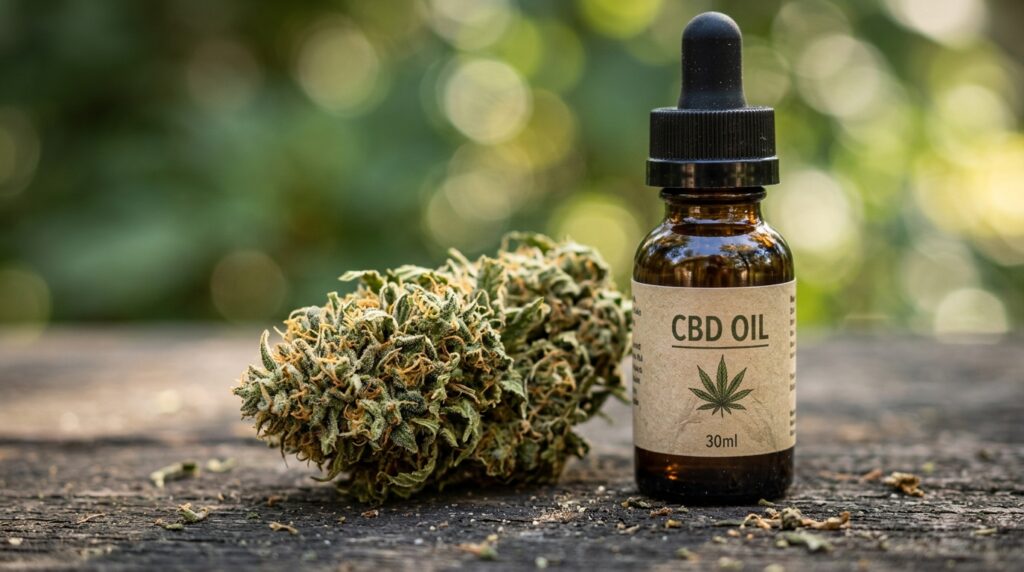
A bottle of cannabidiol oil can display several numbers, unfamiliar ingredient names, and statements about purity or plant origin. Without a clear understanding of these details, it can be difficult to determine how much cannabidiol the product contains or whether its claims are supported by evidence. Reading the label carefully is a practical first step before comparing products or discussing their use with a healthcare professional.
CBD Oil products can differ considerably in concentration, formulation, carrier ingredients, and regulatory status. A label provides some of this information, but it cannot verify every claim on its own. The most useful approach combines label reading with laboratory documentation, an understanding of measurement units, and awareness of applicable local requirements.
Understanding the Numbers on a CBD Label
Product packaging may display total cannabidiol content, liquid volume, serving size, and concentration. These figures are related, but each describes something different. Knowing how to interpret them helps prevent mistakes when comparing bottles with different sizes or formulations.
Total CBD content describes the stated amount of cannabidiol in the entire container. Liquid volume describes how much liquid the bottle holds, usually in milliliters. Concentration describes the amount of CBD relative to a given volume or weight.
For example, a hypothetical 30 mL bottle containing 900 mg of CBD has a nominal concentration of 30 mg per milliliter. A 60 mL bottle containing the same 900 mg has a nominal concentration of 15 mg per milliliter. Both contain the same stated total amount, but the concentration differs.
Milligrams, Milliliters, and Serving Sizes
Milligrams measure mass, while milliliters measure volume. They cannot be treated as interchangeable units. A bottle that contains 30 mL of liquid does not necessarily contain 30 mg of CBD, and the phrase “one dropper” does not establish a consistent cannabidiol amount.
A serving size is another label detail that needs careful interpretation. Manufacturers may define a serving as a particular liquid volume, number of capsules, or quantity of another product format. The stated serving is a product measurement, not automatically a medically appropriate dose.
When a label provides both concentration and serving volume, the amount can be calculated mathematically. For example, if a product contains 20 mg of CBD per milliliter, then 0.5 mL corresponds to 10 mg of CBD, assuming the stated concentration is accurate. This is a calculation example, not a dosing recommendation.
A Practical Label Comparison
Before comparing two products, write down the following information:
- Total stated CBD content in the container.
- Total liquid volume or product quantity.
- CBD concentration per milliliter, serving, or other stated unit.
- Carrier oil and additional ingredients.
- THC information and any relevant product warnings.
- Batch number and availability of laboratory results.
This approach reduces the chance of choosing a product based solely on bottle size or a large number displayed on the front label.
Ingredients, Extract Types, and Product Claims
The ingredient list can reveal important differences between products that appear similar. Some formulations contain a CBD extract blended with a carrier oil, while others include flavorings or additional ingredients. These additions may affect taste, texture, suitability for people with sensitivities, and the product’s intended route of use.
Medium-chain triglyceride oil and hemp seed oil are common ingredients in some formulations. They have different properties and should not be confused with cannabidiol itself. Hemp seed oil comes from the seeds and can be used as a food or skincare ingredient, but it does not naturally provide substantial amounts of CBD.
A label may also describe a product as full-spectrum, broad-spectrum, or CBD isolate. These terms indicate the intended cannabinoid composition. They do not independently establish effectiveness, purity, or safety.
What Spectrum Labels Mean
Full-spectrum formulations are intended to retain CBD and other compounds from cannabis, potentially including THC within applicable legal limits. Broad-spectrum products are intended to retain selected compounds while reducing or removing THC. Isolate-based products use highly purified cannabidiol as the principal cannabinoid ingredient.
The exact composition can vary by manufacturer and batch. A broad-spectrum label does not prove that THC is completely absent, and a full-spectrum label does not establish that a product contains a specific amount of every cannabinoid.
A certificate of analysis can provide more direct information. The report should correspond to the relevant batch and identify the measured cannabinoids. When THC avoidance is essential for legal, employment, medical, or personal reasons, label terminology alone may be insufficient.
Evaluating Laboratory Reports and Quality Information
A certificate of analysis, commonly called a COA, presents laboratory findings for a tested sample. Depending on the testing program, it may report cannabinoid concentrations, pesticide screening, heavy metals, residual solvents, or microbial results.
The report should be traceable to the product being evaluated. A laboratory document that names a different formulation or an unrelated batch does not reliably verify the contents of the bottle. Consumers should also check the date of testing and the identity of the laboratory.
How to Read a Certificate of Analysis
Begin with the product identification and batch number. Compare these details with the packaging. Next, review the cannabinoid results and confirm that the units make sense in relation to the label’s stated concentration.
The testing scope matters as much as the result. A report that measures CBD and THC may not include pesticide or heavy-metal testing. If the document does not list a particular substance or test, its absence from the report should not be interpreted as proof that the substance is absent from the product.
Pay attention to reporting limits. A result described as “not detected” generally means the substance was not detected under the laboratory’s particular method and conditions. It does not necessarily mean that the concentration is exactly zero.
Useful questions include:
- Does the report match the product’s batch number?
- Is the laboratory clearly identified?
- Are the test methods or reporting limits available?
- Does the report include the substances relevant to the product?
- Are the measured CBD and THC amounts consistent with the label?
- Is the document recent enough to relate to the batch being sold?
Third-party testing can improve transparency, but it should be interpreted according to the tests actually performed. A COA is evidence about a sample, not a universal guarantee about every product from the same manufacturer.
Storage Instructions, Expiration Dates, and Packaging
Labels often include instructions for storage and information about shelf life. These details help consumers maintain the product under the conditions specified by the manufacturer. Exposure to heat, light, and air can affect some oils and their components, although the rate of change depends on the formulation and packaging.
A dark bottle may reduce exposure to light, while a secure cap can limit contact with air. Neither feature proves that the contents meet the stated specifications. Product stability also depends on the ingredients, production controls, and storage conditions used before purchase.
Signs That Deserve Attention
Packaging should provide enough information to identify the product and the responsible manufacturer or seller. Missing ingredient details, unclear concentration statements, and absent batch identification make verification more difficult.
Consumers should exercise caution if a bottle has damaged packaging, an unreadable label, or contents that appear or smell unexpectedly different from their original condition. A normal appearance does not prove that a product is safe, and an unusual appearance does not identify the cause of a problem. When in doubt, seek clarification from the manufacturer or a qualified professional.
The product should remain in its original packaging when possible. This preserves the batch number, ingredient information, and warnings that may be needed later. Secure storage is especially important in households with children or pets.
Health Warnings and Regulatory Information
Some labels include warnings about drowsiness, pregnancy, breastfeeding, or interactions with medicines. These details should be read carefully rather than treated as routine packaging language.
CBD can cause adverse effects, including sleepiness, diarrhea, changes in appetite, and alterations in liver-related blood test results. It may also affect the way the body processes certain medications. People who take prescription drugs should discuss potential interactions with a healthcare professional before using a CBD product.
Evidence about safety during pregnancy and breastfeeding is limited. CBD should not be assumed safe in these circumstances simply because it is plant-derived or sold without a prescription. Children also require particular caution, and nonprescription products should not be used to replace appropriate pediatric assessment or treatment.
Checking Regulatory Status in the Philippines
Rules governing CBD depend on the product’s composition, intended use, and applicable laws. Requirements may address product registration, importation, THC content, labeling, and whether a product can be marketed for medical purposes.
Consumers in the Philippines should consult current guidance from the Food and Drug Administration and other relevant government authorities before buying or importing a CBD product. Regulatory status should be verified through official information rather than inferred from online availability or a seller’s assurance.
A product’s label may describe it as natural, laboratory-tested, or legally compliant, but those statements do not necessarily establish government authorization. Any claim of approval should identify the relevant authority and the specific product or authorization involved.
Making a More Informed Purchase Decision
Label reading works best when combined with a clear understanding of the intended purpose. Someone comparing products for general information may focus on composition, testing, and legal status. A person considering CBD for a health concern should also determine whether reliable clinical evidence supports the proposed use.
A simple comparison sheet can help organize the available information. Record the stated CBD amount, concentration, ingredients, testing documentation, warnings, and regulatory details. If one product provides substantially less information than another, that gap should be considered before drawing conclusions about quality.
Price should be evaluated separately from safety and effectiveness. Cost per milligram can help compare the stated amount of CBD in different bottles, but it cannot establish purity, absorption, medical benefit, or suitability for a particular person.
Be cautious of labels that promise guaranteed outcomes, claim to cure multiple diseases, or suggest that CBD can replace prescribed medication. Such claims require evidence and may conflict with applicable regulations. For medical concerns, a qualified healthcare professional can help determine whether further assessment or an established treatment is appropriate.
Final Thoughts
CBD labels provide useful information about concentration, ingredients, storage, and potential risks, but their claims should be checked against reliable documentation. Understanding milligrams and milliliters, reviewing batch-specific laboratory results, and verifying regulatory status can make product comparisons more accurate. Health claims deserve separate evaluation because product composition alone does not establish effectiveness. When medications or medical conditions are involved, professional guidance remains an important part of the decision.